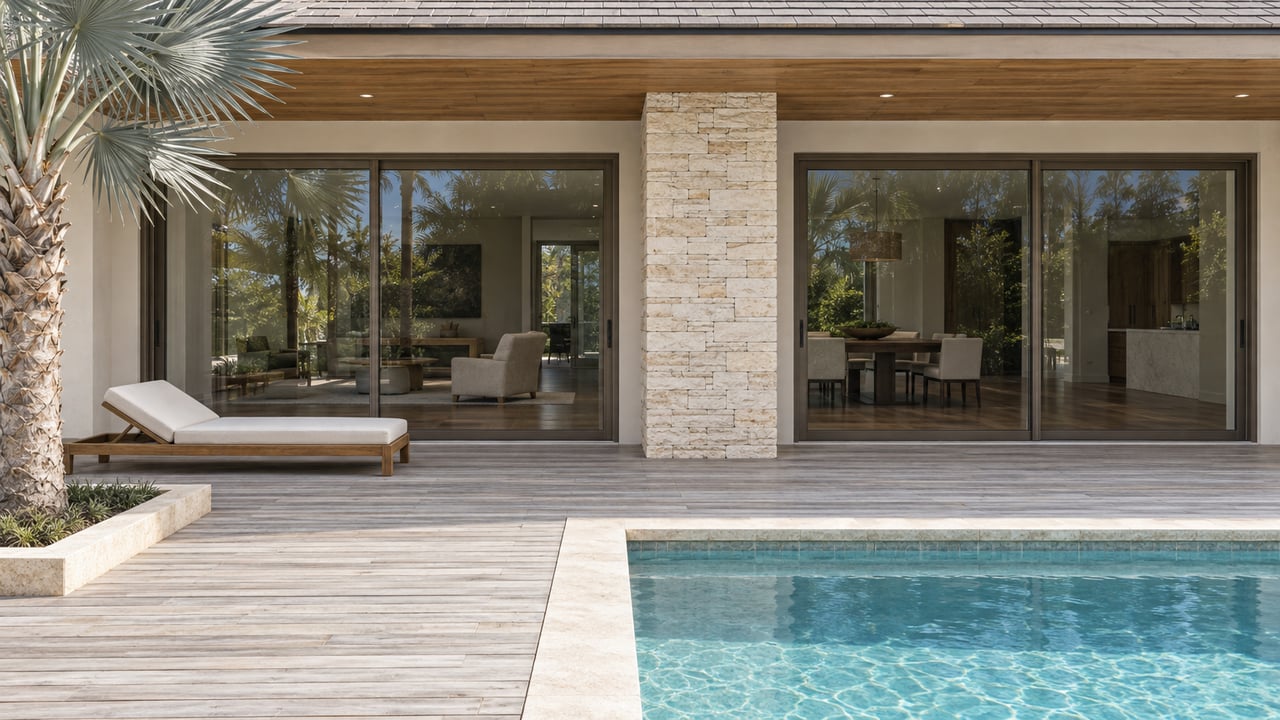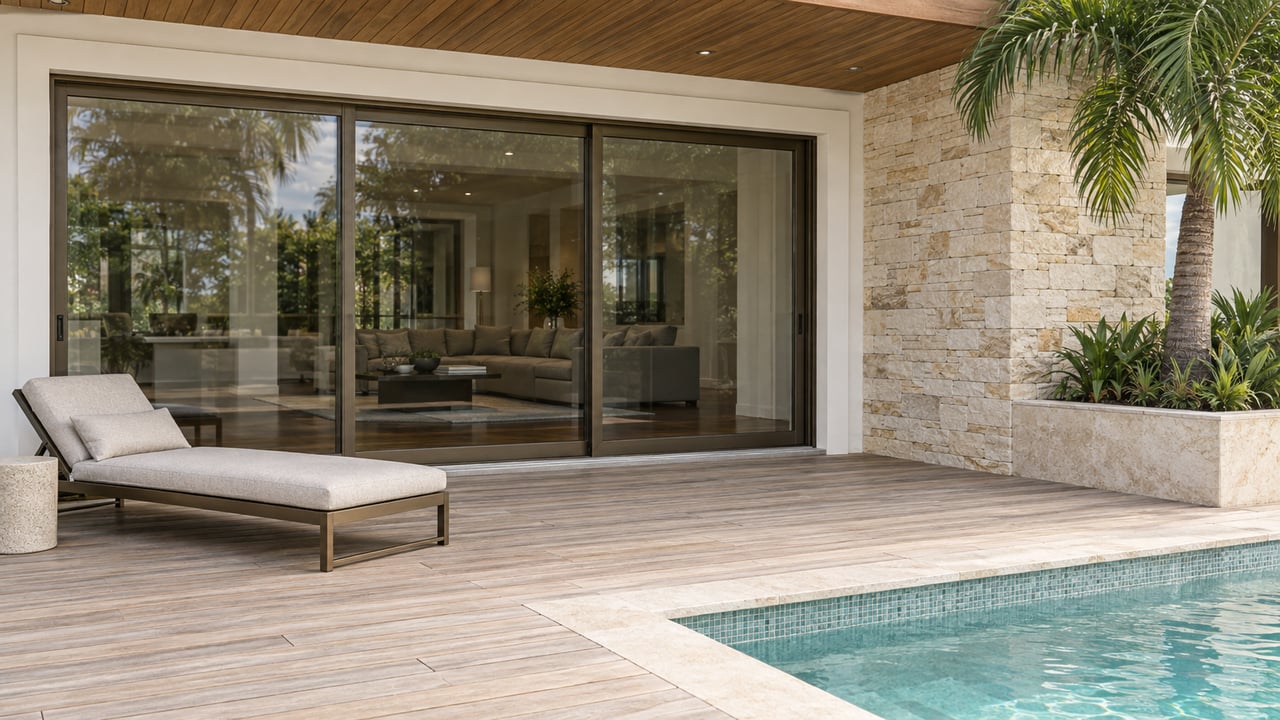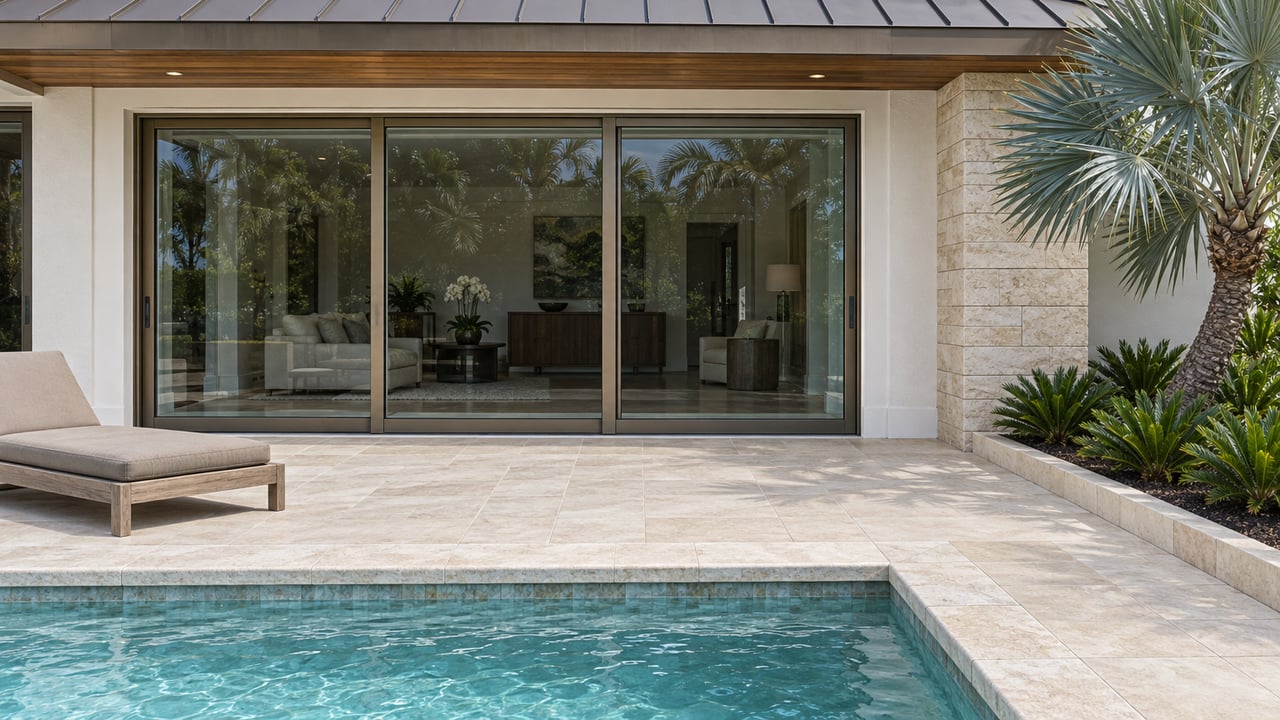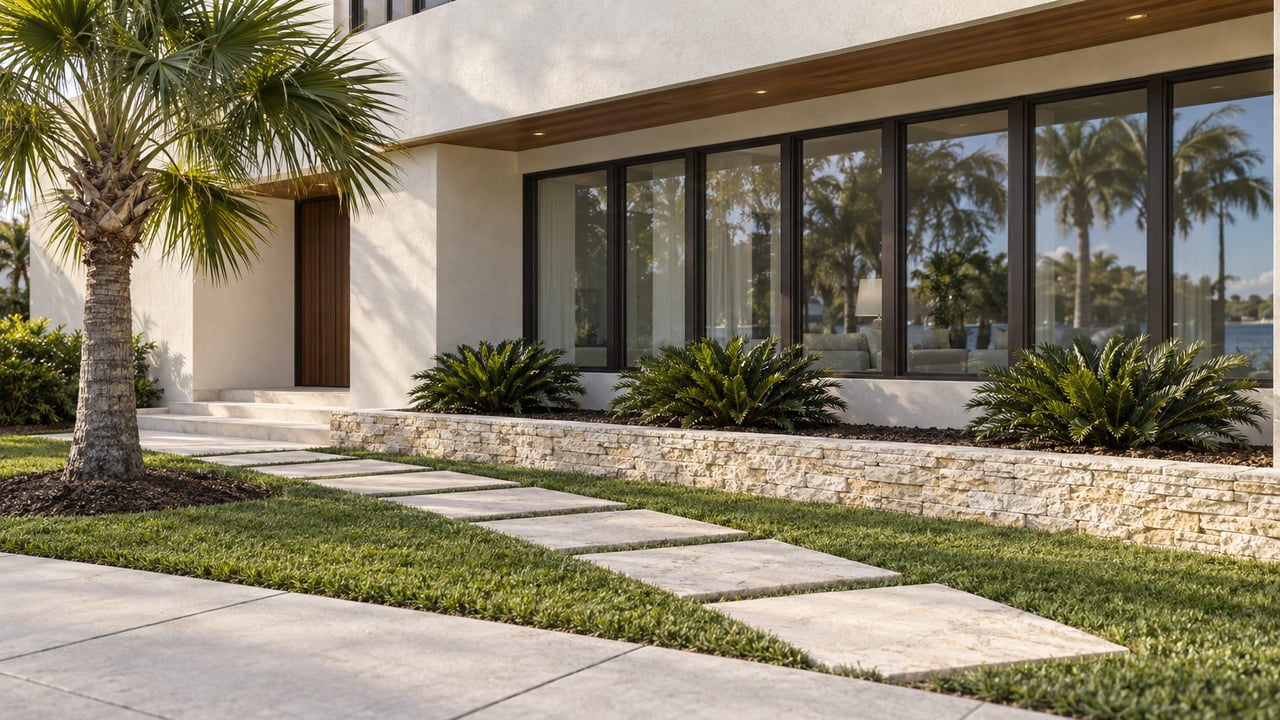
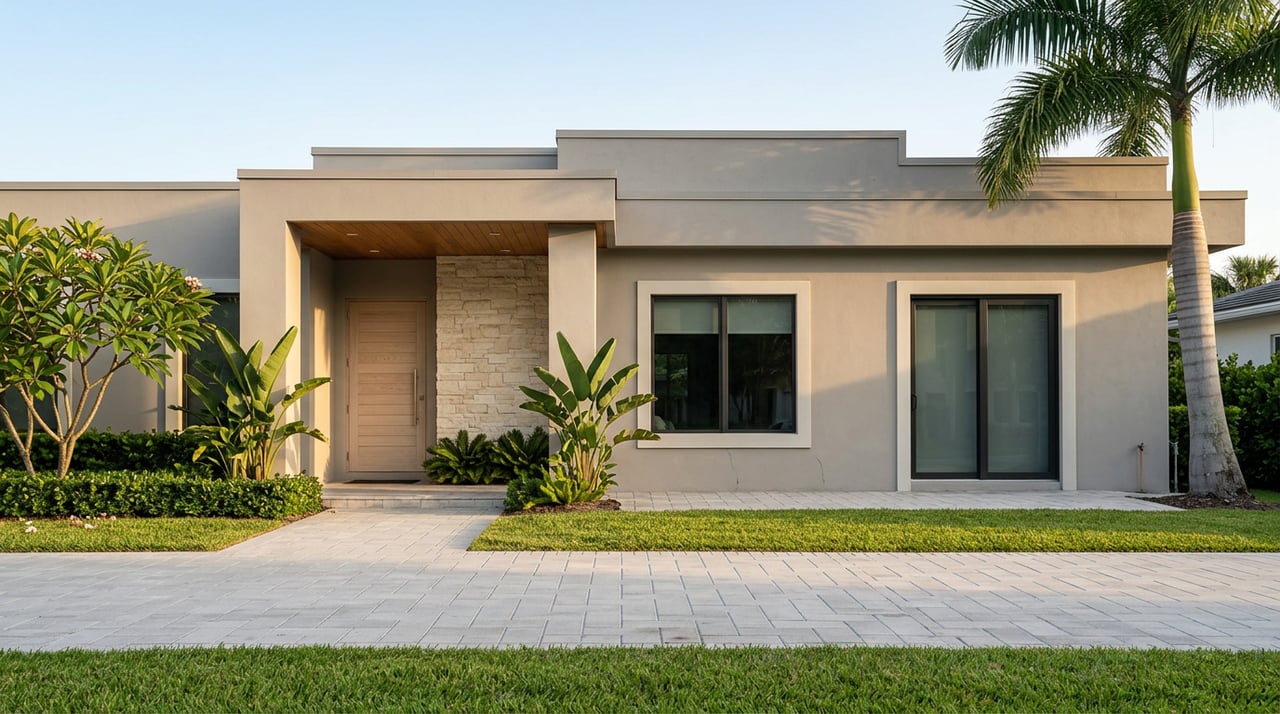
A buyer researching Bay Colony pulls up a property search and the results don't quite line up. One listing shows a private dock behind a single-family estate with a 24-hour guard at the entrance. The next shows a two-bedroom unit in a 600-plus-unit complex with four pools and six tennis courts. Both are tagged Bay Colony. Both are in Fort Lauderdale. Neither result explains that these are two separate associations, governed separately, built for different buyers, sharing nothing but a name a developer chose more than fifty years ago.
This isn't a minor labeling quirk. It changes what you're actually comparing when you look at price, amenities, or what your dues pay for. And once you're inside the correct Bay Colony, a second problem shows up: the neighborhood's own average price is close to useless on its own, because a handful of homes built decades apart are being averaged together as if they were the same product.
The Search Result That Doesn't Warn You
Fort Lauderdale has two entities carrying the Bay Colony name, and the city's own property records keep them separate for a reason. The first is Bay Colony, sometimes formally listed as the Bay Colony Protective Homeowners Association: 108 single-family waterfront homes on deep, wide canals west of the Intracoastal, north of Commercial Boulevard and east of Federal Highway. The second is Bay Colony Club Condominium, a gated complex built in 1970 with well over 600 units along the Intracoastal, its own guard station, and its own set of amenities.
More than one local buyer's guide has felt the need to spell this out explicitly, warning readers that a Bay Colony search is not automatically a Bay Colony Club search, and that confirming which association a listing actually belongs to matters more than the shared street name suggests. That's a strong signal. When multiple independent sources feel compelled to add the same disclaimer, the confusion is real enough to cost buyers time, and occasionally money, when they assume amenities or dues from one apply to the other.
Here's the practical difference laid out side by side:
| Bay Colony (single-family) | Bay Colony Club Condominium | |
|---|---|---|
| Home type | Single-family estates | Condo units |
| Unit count | 108 homes | 600-plus units |
| Built | Late 1960s onward, ongoing renovation and new construction | 1970 |
| Access | 24-hour staffed gate, roving patrol | Guard station, 24-hour security patrol |
| Amenities | None shared; dues fund security and common areas only | Four pools, six tennis courts, three clubhouses, two fitness centers, pickleball |
| Boating | Deep-water canals, no fixed bridges, direct ocean access | Boat slips available to rent, typically under $3 per foot per month |
If your priority is a private dock behind your own house on a wide, deep canal, the single-family Bay Colony is the only one of the two that delivers it. If you want condo living with a shared amenity package and rentable dockage, Bay Colony Club is the one you're actually shopping.
What the Guard Gate Is Actually Paying For
Inside the single-family Bay Colony, the 24-hour staffed entrance and roving patrol are structural, not a marketing flourish layered on top of the price. The community also runs on underground utilities, a detail that matters more after a storm than it does on a sunny showing day. What the dues don't fund is a clubhouse, pool, or fitness center, because there isn't one. Owners have historically described monthly dues as running under $700, covering security and common-area landscaping and little else.
That's a meaningfully different value proposition than Bay Colony Club's condo assessments, which fund the pools, tennis courts, and clubhouses that come with communal living. Neither structure is better in the abstract. They're built for different buyers. But if you're comparing a Bay Colony dues figure against a condo association fee somewhere else and expecting a similar amenity return, you're comparing two different products by mistake.
Why the Average Price Is the Wrong Number to Anchor On
Once you're looking at the correct Bay Colony, the next trap is treating the neighborhood's average sale price as a stable benchmark. It isn't, and the reason is visible in the MLS data itself.
Go back to a small sample of closed Bay Colony sales from 2022 and early 2023, when MLS data tracked just three transactions in the neighborhood: a 1970-vintage home at 6,122 square feet under air sold near $490 per square foot. A fully renovated 1988 mansion over 10,000 square feet sold closer to $858 per square foot. A 2019 new-construction estate, also over 10,000 square feet, sold north of $1,085 per square foot. Three homes, three wildly different per-square-foot outcomes, all inside the same 108-home enclave, and the gap wasn't about location. It was entirely about vintage and renovation depth.
The spread isn't noise. It's the entire story. In a neighborhood this small, construction era and renovation depth explain more of the price than the neighborhood name does.
The trailing twelve months ending July 2026 make the same point from a different angle. Nine Bay Colony homes changed hands in that window, at an average asking price near $4.72 million and an average selling price near $3.86 million, a list-to-sell ratio around 82 percent and an average $752 per square foot. Homes took an average of 247 days or more to sell.
With only nine transactions across a full year in a 108-home community, one heavily renovated estate or one untouched original closing can swing that average by hundreds of thousands of dollars. The neighborhood-wide number is a starting point for a conversation, not a figure you should anchor a valuation to. The comparison that actually holds up is vintage-matched: a 2019 build against another recent build, a dated original against another dated original, not a blended average against a blended average.
How Bay Colony Stacks Up Against Its Usual Shortlist
Buyers comparing Bay Colony typically put it up against Coral Ridge Country Club Estates, The Landings, and Harbor Beach. The comparison usually comes down to range versus seclusion.
Coral Ridge offers more variety in home style and setting, including waterfront, golf-course, and dry-lot properties within the same broader area, plus direct ties to Coral Ridge Country Club's Robert Trent Jones-designed golf course and the Coral Ridge Yacht Club, which maintains a marina with 56 dock slips. It's a more layered, club-centered lifestyle with a wider buyer pool.
Bay Colony trades that range for a single, purpose-built product: privacy behind one guarded entrance and boating logistics built around deep, wide canals with no fixed bridges to open water. Buyers benchmarking Bay Colony's no-fixed-bridge boating access often look at The Landings, though only the homes east of Bayview Drive share that same direct route, since the rest of The Landings doesn't offer it. Harbor Beach comes up in the same conversations for buyers weighing waterfront options with a different access profile.
None of these are better or worse in isolation. They're different answers to the same question: how much do you value shared club life against the quiet of a smaller, single-use gated enclave.
What This Means If You're Comparing Bay Colony to Other Neighborhoods
Two habits will save time here. First, confirm the association name on any listing tagged Bay Colony before you treat its dues, amenities, or boating access as representative. Second, when you're evaluating price per square foot, ask what year the home was built and how deep the renovation went before you compare it to anything else in the neighborhood. A dated original and a 2019 rebuild sitting three doors apart are not the same asset, even though a portal search will show them under the same neighborhood label.
Frequently Asked Questions
Is Bay Colony Club Condominium the same as Bay Colony? No. They're governed separately. Bay Colony is a 108-home single-family community with its own homeowners association. Bay Colony Club Condominium is a separate condo development with its own association, amenities, and guard station.
How many homes are in Bay Colony? Multiple sources put the single-family community at 108 homes, each with deep-water canal access and dockage.
Does Bay Colony have a clubhouse or shared pool? No. Dues have historically covered security and common-area landscaping only. Owners looking for shared amenities like pools or tennis courts are typically describing Bay Colony Club Condominium instead.
If you're weighing Bay Colony against Coral Ridge, The Landings, or another Fort Lauderdale waterfront address and want the vintage-matched comps rather than a blended neighborhood average, Veroushka MacLean Volkert works this micro-market closely enough to tell you which number actually applies to the home in front of you. Schedule a free consultation to start with the right comparison instead of the average one.