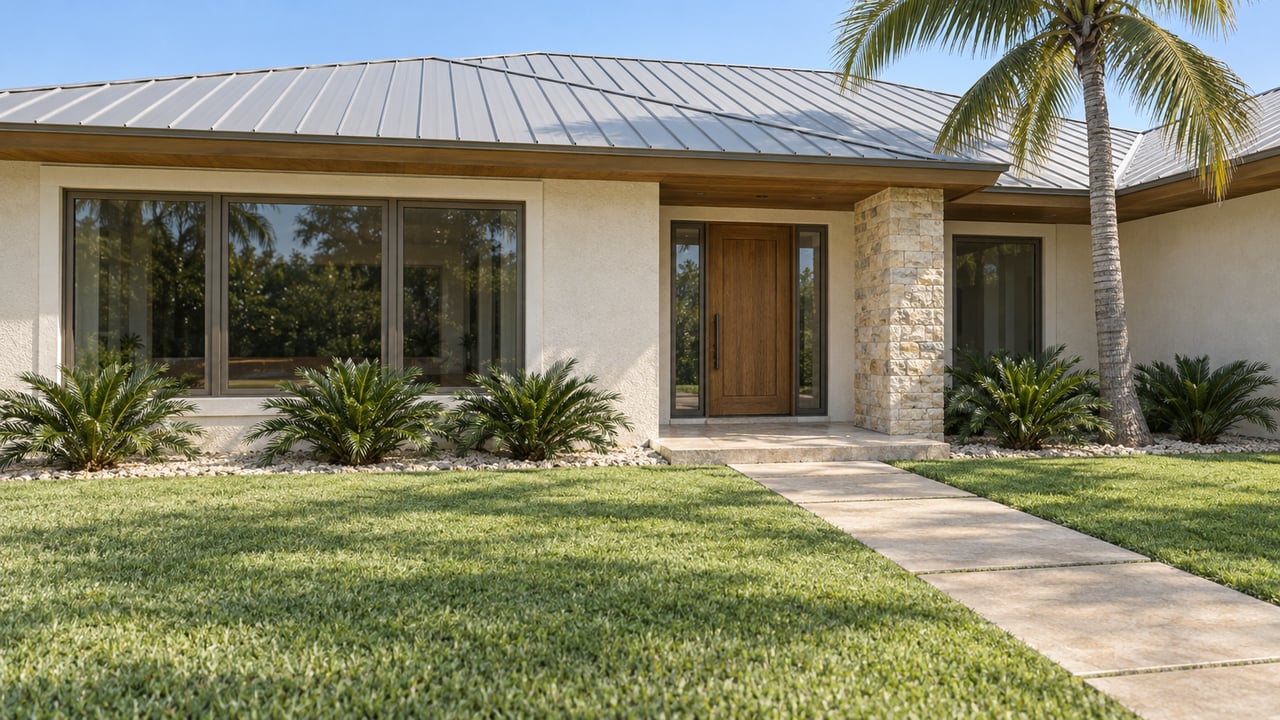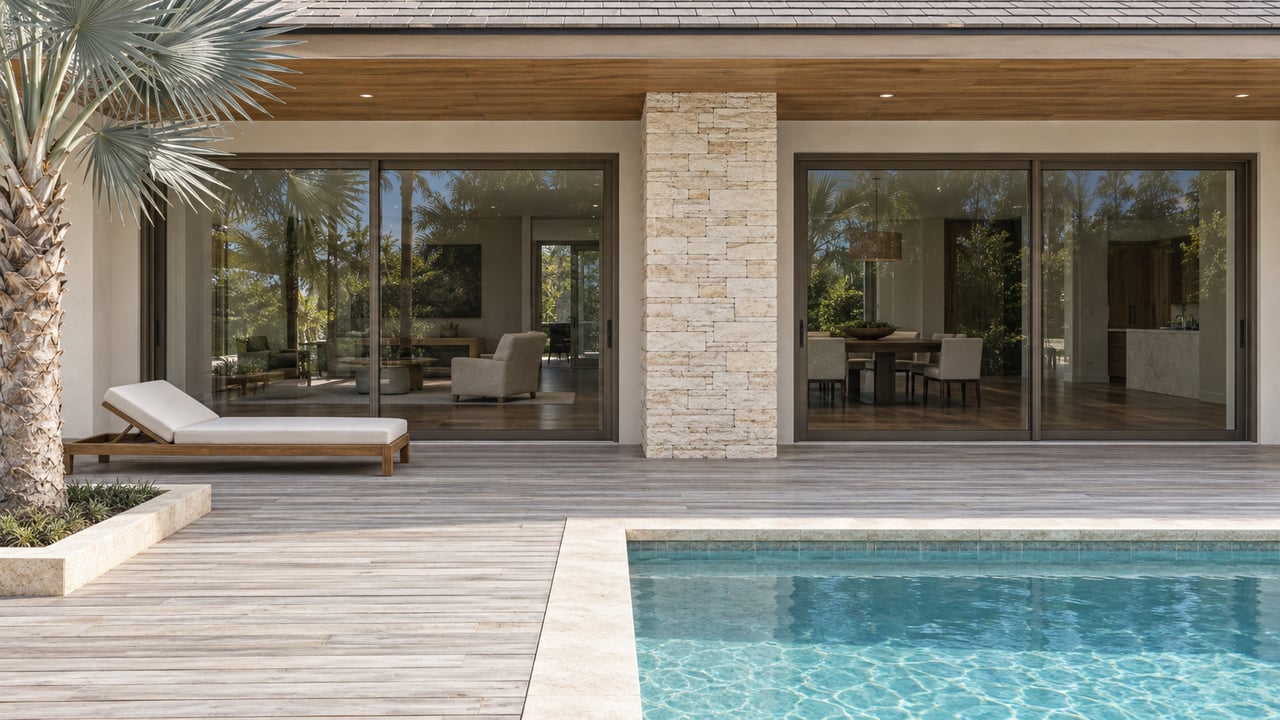
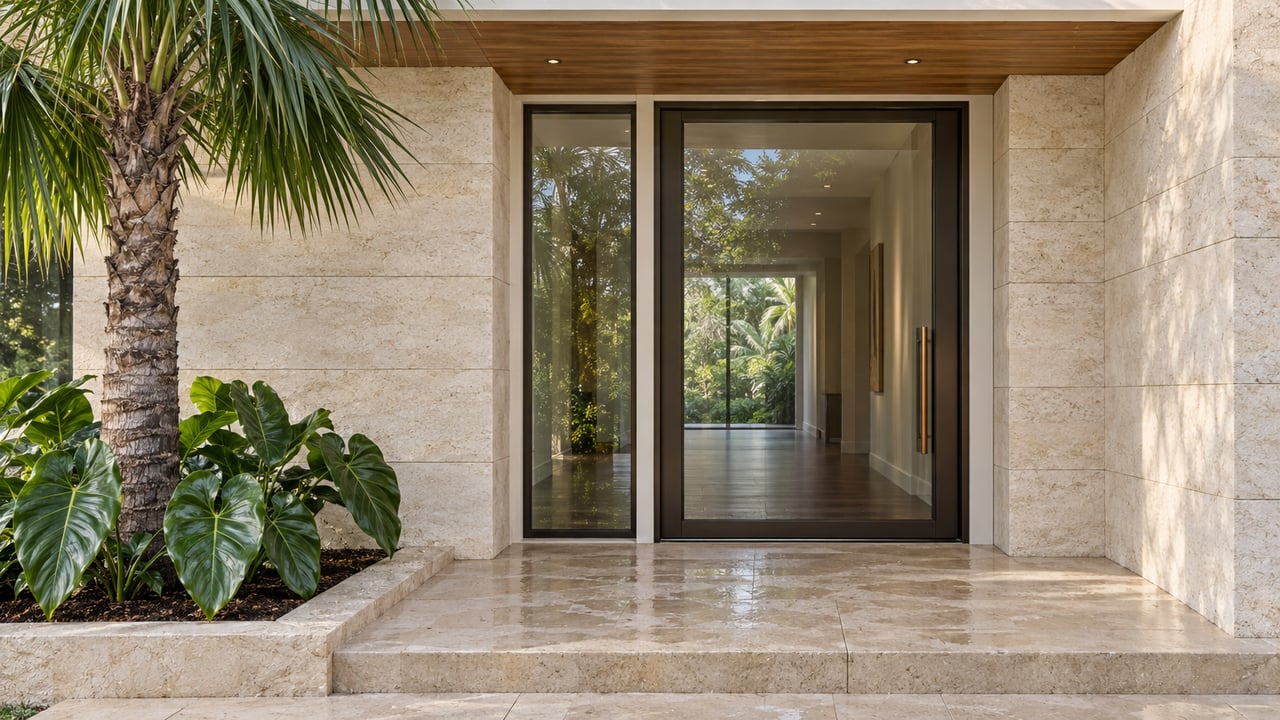
Every listing sheet for a waterfront home in Las Olas Isles or Rio Vista has a property tax line. On a home the seller has owned for years, that figure reflects the seller's homestead exemption and the seller's Save Our Homes assessment, which may have been capped for a long time. None of it carries over to the buyer.
Florida voted on Amendment 3 on Tuesday. The campaign was about the size of the homestead exemption. The rule that matters most to anyone buying on the Las Olas side of Fort Lauderdale this season was never on the ballot. The amendment's own text keeps it: "After any change of ownership, as provided by general law, homestead property shall be assessed at just value as of January 1 of the following year, unless the provisions of paragraph (8) apply."
The Line On The Listing Belongs To The Seller
The Broward County Property Appraiser explains the timing plainly. A buyer who closes this year takes on the seller's exemption status for the current tax year. Because the seller's prorated share is usually credited at closing, the buyer pays the whole bill when it arrives in November. On the next January 1, the property is reassessed "based on your purchase price and comparable qualified sales from this year." The seller's exemptions drop off at year end, and the buyer has to file for homestead in their own name.
For a March closing on Nurmi Isles or in Idlewyld, the sequence runs like this:
- Purchase year. The November bill is still calculated on the seller's exemptions and the seller's capped assessment, and the buyer pays all of it.
- January 1 of the following year. The appraiser resets the assessment to just value, using the purchase price and comparable sales. January 1 is also the date that decides exemption eligibility.
- March 1. This is the deadline for a timely homestead filing. For the 2027 tax year, BCPA lists the window as March 3, 2026 through March 1, 2027.
- August. The TRIM notice arrives with the new assessment and the proposed tax rates.
- November. The first bill fully in the buyer's name arrives.
BCPA calls this second-year jump the most common surprise for new owners. Its FAQ answers it directly: "you inherited the seller's homestead exemption savings and the seller's existing Save Our Homes reduced assessment -- but those savings automatically expired at the end of last year."
Why A Fixed Exemption Shrinks As The Price Rises
Amendment 3 would raise the homestead exemption for all non-school taxes to $150,000 in 2027 and $250,000 in 2028, then adjust it for inflation. That is a fixed dollar amount, and it lowers taxable value only for the non-school levies. The reset at sale works the other way. It applies to the full value, at every rate, and it gets bigger as the price goes up.
Fort Lauderdale's own taxing structure shows how big the gap is. An August 2026 TRIM notice for a parcel inside city limits lists the proposed 2026 rates from each authority. The notice is for a commercial parcel, so read it for the rate structure only.
| Taxing authority | Proposed 2026 mills | Levy type the exemption reaches |
|---|---|---|
| Broward County Commission | 5.6658 | Non-school |
| Broward Public Schools, state, local board and debt | 6.4527 | School, not reached |
| City of Fort Lauderdale, operating | 4.1193 | Non-school |
| City of Fort Lauderdale, voter-approved debt | 0.2216 | Non-school |
| North Broward Hospital District | 1.2391 | Non-school |
| Children's Services Council | 0.4500 | Non-school |
| South Florida Water Management, three levies | 0.2301 | Non-school |
| Florida Inland Navigation District | 0.0270 | Non-school |
| Total | 18.4056 | 11.9529 non-school |
The city rate is final. The Fort Lauderdale City Commission adopted its FY2027 operating millage of 4.1193 and debt millage of 0.2216 on September 14, 2026. As the Sun Sentinel put it, that works out to $412 for every $100,000 of assessed value, one of the lowest city rates in South Florida.
Here is an illustration at those rates. At about 11.95 non-school mills, the full $250,000 exemption is worth roughly $2,990 a year. A hypothetical $4 million assessment at 18.4056 mills produces about $73,600 in ad valorem tax before any exemption. Even if a buyer received the entire 2028 exemption, it would cover about 4% of that bill, and the rest would be set by the reset assessment.
Broward Property Appraiser Marty Kiar's numbers point the same way. He modeled the amendment as if it had applied to the 2025 tax year. The average saving came to $1,325 in the first year for homesteads assessed above $150,000 and $2,661 in the second year for those assessed above $250,000, according to his remarks reported in the Sun Sentinel. An average across Broward is a useful benchmark. A single reassessment on a Las Olas Isles home is in a different range.
The Save Our Homes cap is also unchanged. Annual increases on a homestead stay limited to the lower of 3% or the change in the Consumer Price Index. For 2026, the Department of Revenue set that rate at 2.7%, according to BCPA. The cap limits increases starting from the reset value, so it begins working only after the new assessment is in place.
The December 31 Line For Buyers Arriving From Elsewhere
If Amendment 3 reached the 60% approval it needed, one provision applies directly to buyers relocating to Las Olas from another state or country. The ballot summary says that "persons who are not Florida residents on December 31, 2026, will receive the existing homestead exemption upon qualifying for a homestead exemption, with the increased homestead exemption beginning with the fifth year of exemption, to the extent permitted by the U.S. Constitution."
As a result, two buyers who close on similar homes in the same month next year could get different exemptions for several years. The difference depends on where each one was a resident at the end of 2026. The summary's own qualifier, "to the extent permitted by the U.S. Constitution," indicates the drafters expected the provision could be questioned. A buyer whose plans depend on it should treat it as open.
Portability, an existing rule, also matters to buyers moving within Florida. BCPA says the homestead exemption itself does not transfer, but an eligible owner can move up to $500,000 of Save Our Homes savings to a new homestead established within three tax years of leaving the old one. For a Coral Springs or Weston owner moving east to a waterfront home, portability can do more to reduce the first full bill than the exemption increase does.
Second Homes Reset Too, And May Carry More Of The City's Budget
Many Las Olas homes are owned by people whose primary residence is somewhere else. For them, the amendment cuts the annual cap on non-school assessment increases for residential property of nine units or fewer from 10% to 5%, starting January 1, 2027. The same section keeps the reset: after "a change of ownership or control... including any change of ownership of a legal entity that owns the property," the property is assessed at just value. Buying the home through an LLC does not change that.
The city's budget is where this connects to the buyer. Mayor Dean Trantalis told a Tower Club audience that Fort Lauderdale would lose $17 million in property taxes in the first year and up to $27 million in the second. He also said property taxes fund 45% of daily operations and that 62% of the budget goes to police and fire, the Sun Sentinel reported. The city has not raised its rate in 20 years. Trantalis said that if it did, non-homesteaded properties and second homes would take the hit.
The size of the gap depends on which estimate you use. Kiar's earlier model, reported in May, estimated Fort Lauderdale's losses at $14.5 million, or 5.3% of property tax revenue, in the first year and $26 million, or 9.4%, in the second. That analysis came before the final ballot language. The same reporting noted that Fort Lauderdale's large commercial tax base cushions it compared with mostly residential cities such as Cooper City and Parkland. NBC 6 reported that city leaders listed leaving vacant positions unfilled, tighter contract negotiations, efficiency improvements and new technology as possible responses. The city also directs residents to its Spotlight FTL site for details on how property tax revenue is used.
A second-home buyer should read this in two layers. The cap on annual increases may get tighter. The rate applied to the assessment depends on decisions the commission has not made yet. The reset at purchase happens either way.
Running The Number Before The Offer
BCPA's New Homebuyer's Tax Estimator gives a rough estimate for the first tax year after purchase. It uses an average rate of 19.8394 mills rather than any specific parcel's rate and leaves out non-ad valorem assessments, so for a Fort Lauderdale address it gives a range, not the bill. Applying the city's adopted rates and the authority-by-authority breakdown from a recent TRIM notice narrows the estimate. This post is general information, not legal, tax or financial advice. Confirm your own situation, including residency timing and portability, with a qualified tax professional or real estate attorney.
Frequently Asked Questions
Does Amendment 3 change what I pay in the year I buy? No. In the purchase year, the buyer takes on the seller's exemption status, and the November bill reflects it. The reset applies starting the following January 1.
Does the higher exemption reduce school taxes? No. The amendment applies to non-school levies, which make up about 11.95 of the 18.41 proposed mills on the Fort Lauderdale TRIM example above.
When was the vote, and what did it need? The amendment was on the November 3, 2026 ballot and needed at least 60% voter approval, as the Sun Sentinel reported. If approved, it takes effect January 1, 2027, so check the certified result with the Florida Division of Elections.
At Veroushka MacLean Volkert, every Las Olas offer we prepare comes with a post-closing tax estimate built from the buyer's own reset, residency timing and the city's adopted rates, not from the seller's bill. Schedule a free consultation, and we will work through that estimate with you before you sign.